

If someone you care about was arrested for domestic violence in South Carolina, your first questions are probably the obvious ones: Where are they? Has bond been set? What has to happen before they can come home?
Here’s the key thing to know: bond isn’t up to the bondsman. Only the court decides whether bond is available, how much it is, and what conditions come with release. Once the court sets an eligible surety bond, that’s where we come in — Clear Path Bail Bonds can look into the details, walk you through the paperwork (most of it can be done remotely), and let you know what comes next.


Find out which detention facility they're at and confirm they've actually finished the booking process.
South Carolina breaks domestic violence charges into different levels, and the exact classification matters — it can determine which court hears the case and how bond gets handled.
If there's no bond amount or type showing yet, that usually means the person is still waiting on a bond hearing or another step in court.
Law enforcement takes the person into custody, recording their identifying details and the charges against them.
The detention facility logs the person's information into its system. Keep in mind — this doesn't always show up in public records right away.
A judge reviews the case to decide whether release is appropriate, what the bond amount should be, and whether any conditions need to apply.
The court finalizes the bond amount and type, along with any conditions the person will need to follow once released.
Once eligible, Clear Path can look over the bond details, handle the paperwork remotely, and submit an approved surety bond.
The detention facility double-checks the charges, any holds, and release conditions before completing its own internal release steps.
The person is released once the facility confirms everything required has been satisfied. Keep in mind, being released doesn't mean the case is over — it's still ongoing.

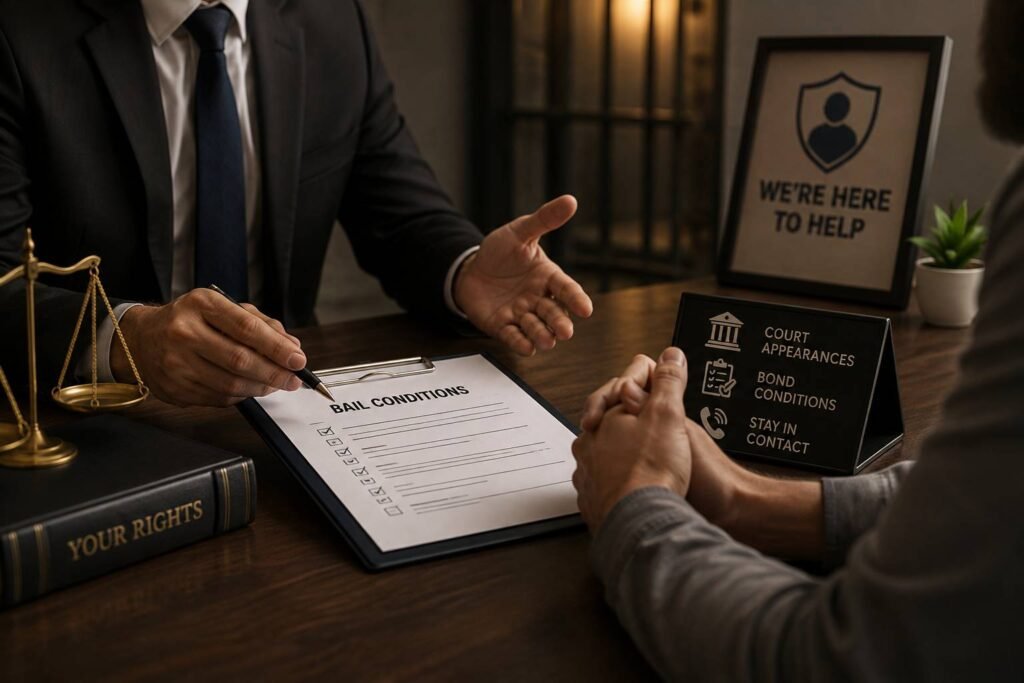
When making that call, South Carolina courts work within the state’s bail laws. Judges typically look at the charge itself, the person’s criminal history, any pending charges, and the details in the incident report.
They’ll also factor in whether the person is already out on another bond, how likely they are to show up for future court dates, and whether letting them out could pose a real risk to someone else or the community.
It’s important not to mix these up: the 24-hour rule is about when the hearing takes place, not when someone gets released. An arrest alone won’t tell you the bond amount, the type of bond, or how soon release might actually happen.
Knowing which party is responsible for each piece of the process can save you a lot of confusion.
1. Whether bond is available at all
2. How much the bond will be
3. Any conditions attached to release
1. Reviewing the bond details
2. Guiding you through the paperwork
3. Submitting an eligible surety bond
1. Keeping the person in custody
2. Processing everything on their end
3. Carrying out the actual release
South Carolina law breaks domestic violence charges into several distinct levels, and they aren't interchangeable. Which level someone's charged with can shape which court hears the case, how bond gets weighed, and what conditions might come attached.
This is a misdemeanor under South Carolina law. As the lowest tier, it typically moves through different court procedures than the more serious charges above it.
Also a misdemeanor, but the statute kicks in additional circumstances beyond what's required for a Third Degree charge. Those added factors can influence how bond is considered.
This one's a felony, tied to specific circumstances laid out in South Carolina's domestic violence statute. Because it's a felony, the bond procedures and court requirements look different from the misdemeanor levels.
DVHAN sits at the top of the scale — the most serious classification under Chapter 25, and also a felony. This level can affect both the type of bond available and which court has jurisdiction over the case.
South Carolina law gives judges room to factor in things like the nature of the charge, the person’s criminal history, any pending charges, past failures to show up in court, existing bonds, and general safety concerns.
For domestic violence cases specifically, the court can also look at a history of violence, mental health, whether the person has violated court orders before, and whether releasing them could put someone else at risk.
None of these decisions are something a bail bond company has the power to change.
This is the figure the judge orders — it's entirely up to the court to decide.
This is simply the fee for working with a licensed bail bond company.
The principles that guide every call, every case, and every family we help — no matter the hour.
A judge’s order can limit or block communication and contact entirely. If a no-contact restriction is part of the release conditions, it’s the written order itself that spells out exactly what the person can and can’t do.
This kind of restriction is completely separate from the bond amount — they’re two different things. And breaking a court-ordered restriction can bring its own legal consequences on top of the original case.

Behind the scenes, the facility may need to double-check the charges and any holds, verify whatever conditions the court ordered, finish up paperwork, or arrange electronic monitoring if that’s part of the deal.
One more thing worth remembering: getting released doesn’t wrap up the case. The person still has to stick to the court’s conditions and show up for every required court date.
Get familiar with how booking works, what a bond hearing involves, and generally what needs to happen before someone's released.
Learn who actually makes the call on bond, and what the court might factor into that decision.
See how the bond amount the court sets is different from what a bail bond actually costs.
Understand why release often isn't unconditional and what kind of restrictions might apply.
Find out what a court-ordered contact restriction actually means in practice.
Learn why the specific domestic violence charge level matters so much.
Understand what responsibilities don't just disappear once someone's out.
 Posted on Google
 Elizabeth Asay
Trustindex verifies that the original source of the review is Google.
He was absolutely amazing, and fast! HE TAKES JAIL PAYMENTS TOO, so don’t think just because your money is on your jail card he’s not coming! The jail will write him a check with the funds from your card. Truly 24/7 hours and went out of his way to help get the bond done all while keeping the updated the entire time!Posted on Google Danielle HudsonEverything was easy and smoothPosted on Google
 Greg HollifieldCouldn’t have been any better and quicker and Ron was more than helpful and went above and beyond to get my girl back home with me. I would refer them to anyone I know without thinking twice. Another big thanks to Ron for everything!!Posted on Google
 Shonda HannszRon is on it! Excellent customer service! There's lots of Bond companies to choose from, I highly recommend Clear Path.Posted on Google
 Mark SampsonThey were extremely helpful, and humane. Great Service here for sure 👏 👍🏾Posted on Google
 Kristin BakerWas absolutely super helpful and went far out of his way to help me and I'm in another state!! He even called in a favor to other bondsmen in the area and tried to help me out . Thank you so much!!! It was my pleasure to work with you !!!Posted on Google
 henny brameGreat service

Bond may be available, but the arrest alone does not determine the outcome. The court decides whether release is appropriate, the bond amount, and any conditions based on the charge and circumstances of the case.
For a charge under South Carolina's Domestic Violence chapter, state law requires the bond hearing to occur within 24 hours after arrest. Booking and final release processing are separate from the hearing itself.
The appropriate court sets the bond. A bail bondsman does not determine or change the amount.
No. There is no single amount that applies to every domestic violence case. The charge and case-specific circumstances affect the court's decision.
Clear Path can help after an eligible surety bond has been set. We can review the available information, complete paperwork remotely, review payment or collateral requirements, and submit an approved bond when applicable.
Stay updated with the latest legal news, tips, and Justiq announcements.

Clear Path Bail Bonds offers fast, confidential, and affordable 24/7 bail bond services across South Carolina, helping bring your loved ones home quickly when it matters most.
Copyright © 2026. All Rights Reserved. Clear Path Bail Bonds | Website Design and Development by ArtistryAds